

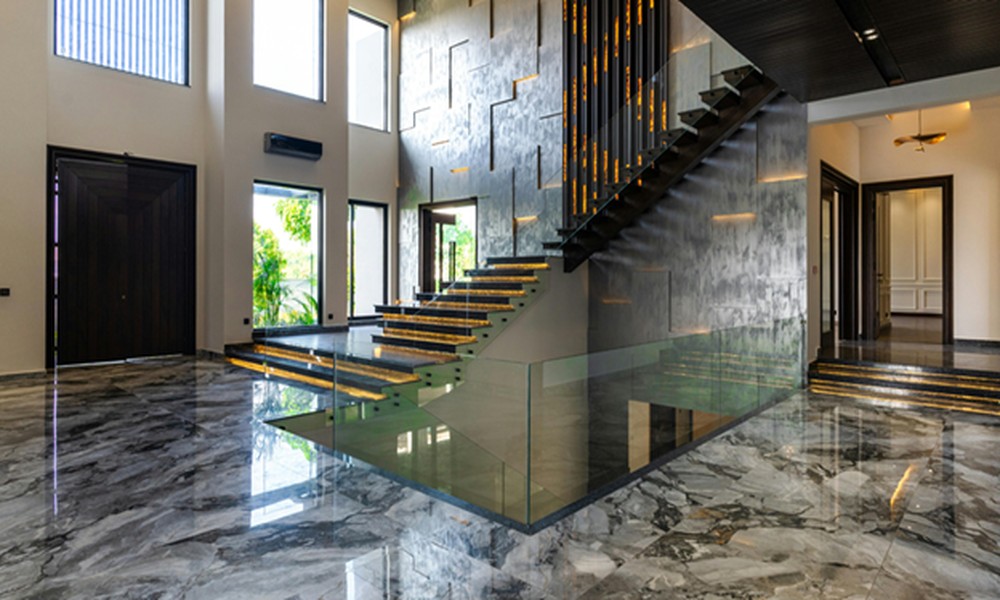
One of the most common design challenges homeowners face is how to use different flooring materials throughout the house without the result feeling disjointed or chaotic. The reality is that very few homes use a single flooring type from front door to back and that’s perfectly fine. Different rooms have different functional needs, and the right material for a bathroom is rarely the right material for a bedroom. The key is learning how to mix flooring types in a way that feels intentional rather than accidental. When done well, using qualitytile flooring for homes alongside other materials creates a natural flow that makes every room feel like part of a unified whole. Here’s how to pull it off.
Start With a Unifying Color Palette
Before you select a single material, establish the color story you want your home to tell. The most cohesive mixed-flooring homes share one thing in common their floors all live within the same tonal family, even if the materials are completely different.
If your living areas feature warm honey-toned hardwood, your tile selections in the kitchen and bathrooms should pull from warm beige, cream, or earthy brown tones rather than cool grays or stark whites. If your laminate leans toward cool, ashy tones, pair it with light gray or slate-toned tile to maintain visual harmony.
You don’t need to match in fact, an exact match between different materials often looks worse than a deliberate tonal relationship. What you’re aiming for is contrast that feels curated, not clashing. Pull samples of every flooring material you’re considering and lay them side by side in natural light before committing. What works in a showroom doesn’t always work together in your home.
Use Tile as Your Anchor Material
Tile is one of the most versatile flooring materials available, and in mixed-flooring homes it works particularly well as an anchor the material that other floors transition into and take their visual cues from. This is especially true in open-plan layouts where the kitchen, dining, and living areas share visual space without physical walls separating them.
A large-format tile in the kitchen or entryway sets a tone that the rest of the home’s flooring can complement. Its clean lines, neutral palette options, and wide range of finishes make it easy to pair with hardwood, laminate, or luxury vinyl plank in adjacent spaces. Wood-look tile, in particular, creates an almost seamless visual bridge between hard tile zones and plank-style flooring in other areas making it an especially smart choice where multiple materials meet.
In wet zones like bathrooms, laundry rooms, and mudrooms, tile is the practical choice regardless of what surrounds it. Choosing a tile that echoes the tone and scale of the flooring in adjacent dry areas keeps the transition feeling intentional rather than abrupt.
Plan Your Transition Points Carefully
Where two different flooring materials meet is where most mixed-flooring designs either succeed or fall apart. Transition strips are the practical solution, but their placement, material, and profile all affect how polished the final result looks.
Threshold strips work well between rooms of similar height, providing a clean visual boundary without an awkward step. T-molding is the standard choice when two floors of equal thickness meet under a doorway. Reducer strips are used when one floor is higher than the other common when tile meets thinner laminate or vinyl.
Beyond the hardware itself, think carefully about where transitions happen spatially. Ideally, flooring changes should occur under doorframes or at natural architectural boundaries not in the middle of an open space. A flooring transition visible from across the room draws the eye in a way that can feel jarring. Where possible, plan your layout so transitions fall at thresholds, under door casings, or at the edge of built-in features like kitchen islands or cabinetry.
Match Undertones, Not Just Colors
This is the detail that separates a professionally designed mixed-flooring home from one that feels slightly off without anyone being able to pinpoint why. Every flooring material has an undertone, a subtle warm or cool hue beneath its surface color and when undertones clash, the result feels visually unsettled even when the colors seem similar on paper.
Warm undertones include yellow, red, orange, and brown. Cool undertones lean toward gray, blue, and green. A floor with warm undertones paired with a tile that reads cool will create low-level visual tension throughout the space. It may not be obvious to an untrained eye, but it registers subconsciously and it’s the kind of thing that makes a home feel harder to decorate over time.
When shopping for multiple flooring materials, always compare them together in the actual lighting conditions of your home. Natural light, incandescent light, and LED light all reveal undertones differently, and a combination that looks harmonious in a showroom can read differently once installed.
Keep Scale and Pattern Consistent
The size and pattern of your flooring materials should feel proportional to each other and to your rooms. Large-format tiles paired with wide-plank hardwood or laminate create a sense of scale that feels balanced. Mixing a large-format tile with a very narrow plank floor can create a visual imbalance where one material will dominate the other rather than complementing it.
If you’re using patterned tile anywhere encaustic, geometric, or mosaic keep the surrounding flooring simple and solid. A patterned tile paired with a heavily grained wood floor in an adjacent space creates visual competition. Let one material lead and the other support.
Mixing flooring types across rooms isn’t just acceptable, it’s often the smartest design decision you can make for a home with varied functional needs. The difference between a home that feels pulled together and one that feels disjointed almost always comes down to planning: a unified color palette, deliberate transition points, matched undertones, and consistent scale. Get those fundamentals right, and your floors will feel like a single cohesive design statement even when they’re made from entirely different materials.
