

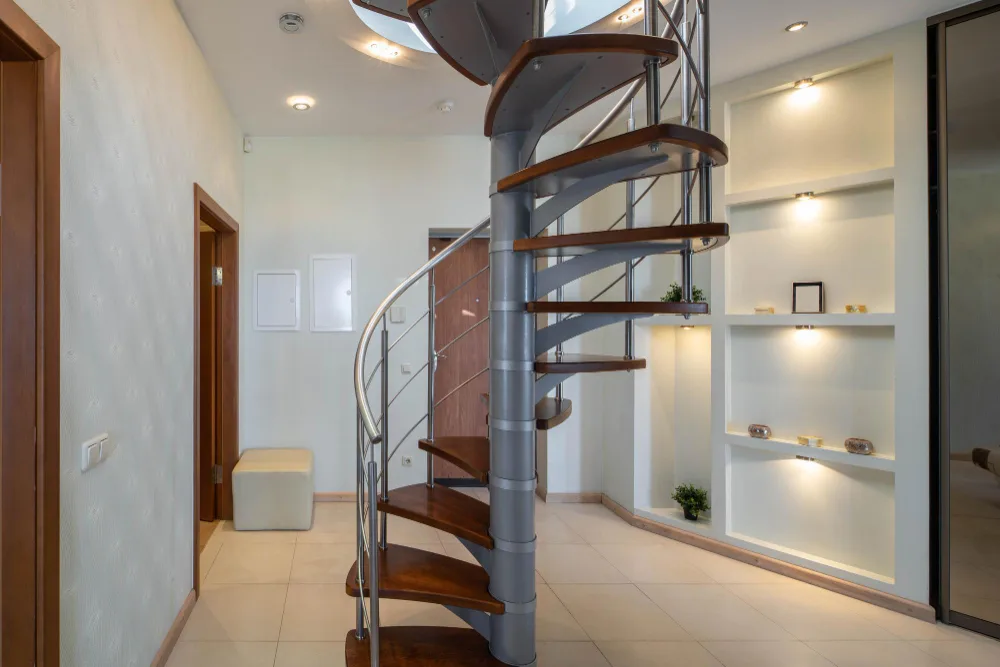
Spiral staircases provide an efficient way to navigate between floors in homes where space remains limited. These compact designs occupy a smaller footprint compared to straight or L-shaped staircases, freeing up valuable square footage for living areas, furniture, or other features. The central pole and radiating treads create a helical path that maintains functionality while introducing an element of architectural interest. Steel construction ensures strength, and options for various diameters allow adaptation to different room layouts. Spiral staircases suit renovations, additions, or new builds, offering versatility in both interior and exterior applications.
Key Advantages of Spiral Designs in Residential Use
Spiral staircases address common spatial constraints effectively. In smaller homes or multi-level spaces like lofts and basements, the design minimizes the area required for circulation. Wider models accommodate comfortable passage, while narrower versions fit tight corners or alcoves. The configuration supports safe movement with consistent riser heights and tread depths aligned to standard building practices. Durability comes from welded steel components that handle regular use without flexing or shifting over time. Powder-coated finishes protect against moisture and wear, extending suitability to damp environments or outdoor settings such as decks and patios.
Beyond practicality, these staircases integrate into diverse interior styles. Neutral finishes blend with contemporary settings, while patterned elements add texture to more traditional spaces. The modular nature of many builds simplifies future adjustments, allowing updates without structural changes.
Customization Options That Adapt to Changing Needs
Personalization defines much of the appeal in spiral staircases. Choices include handrail profiles, baluster arrangements, and infill panels that influence both appearance and privacy levels. Laser-cut panels offer patterns ranging from simple geometrics to more intricate designs, with solid options available for enclosed effects. Interchangeable panels stand out as a practical feature, enabling style refreshes by swapping sections rather than replacing the entire structure.
Fabrication begins with detailed consultations to capture dimensions, preferences, and site conditions. Computer-aided drawings ensure precision, followed by production in a dedicated facility. Steel receives careful welding and finishing, with powder coating applied in a range of colors for consistent protection. This approach results in components that fit together accurately during assembly. Providers focused on crafted metalwork, such as Custom Iron, emphasize built-to-order processes that prioritize exact specifications over off-the-shelf kits.
The Process from Concept to Completed Installation
The journey for spiral staircases involves several straightforward steps. Initial discussions clarify requirements, including code considerations and load needs. Once approved, fabrication assembles the staircase fully in-house before breaking it down into shippable sections. This method eases transport and reduces on-site work.
Assembly typically requires basic tools and a small team, often completed in a few hours following clear instructions. Pre-fitted parts eliminate the need for cutting or welding during setup, minimizing disruption. Maintenance stays simple, with occasional cleaning sufficient to preserve the coated surfaces. For those exploring reliable options in metal stair fabrication, insights from established fabricators like Custom Iron demonstrate effective techniques grounded in decades of experience.
Versatile Applications Across Home Environments
Spiral staircases appear in various residential contexts. Interior installations connect main floors to upper levels or attics, preserving open floor plans in urban or compact dwellings. Outdoor placements provide access to elevated porches or garden features, with weather-resistant treatments ensuring longevity. In renovations, these staircases replace older, space-heavy options, improving flow and accessibility.
Standard models serve entry-level needs, while advanced versions incorporate enhanced detailing for expressive results. Nationwide shipping supports projects in different regions, with American fabrication maintaining consistent quality control. Custom Iron, operating from Minnesota since 1975, brings longstanding expertise to these builds, collaborating on designs that balance form, safety, and ease of use.
Overall, spiral staircases deliver thoughtful efficiency in home layouts. Their adaptable construction and durable materials make them a lasting choice for spaces that demand both practicality and presence.
