

Introduction
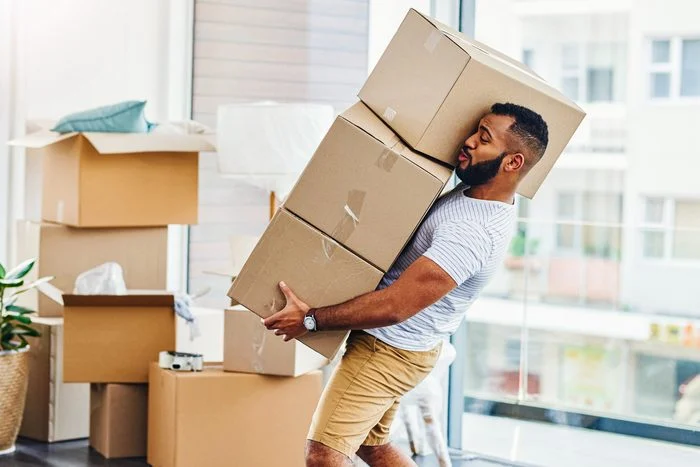
If done incorrectly, lifting heavy items can result in serious injuries or even damage your home and possessions. There will always be difficulties when moving bulky containers and large furnishings, but movers can do it without hurting your back or damaging your walls if you prepare in advance. Anyone planning a move should become familiar with these challenging moving techniques to prevent issues.
Make a route map
Choose the route you want to carry your possessions in before you start moving. The simplest route isn’t always the most straightforward. You might be able to take advantage of broader passageways, skip a narrow stairway, or avoid barriers like a hole or curved corridor by taking a route that is longer. By planning your path, you can also include useful facilities, like a ramp, to help you pass expected problematic places or safeguard fragile things like railings. Once you’ve decided on a direction, make sure it’s free of obstructions like boxes and equipment. It is much more difficult to avoid accidents when holding an enormous load because carrying bulky goods reduces your field of vision.
Make sure drawers are empty.
Even if drawers don’t weigh a lot, each kilogram counts when moving a desk or cabinet. Make sure that the drawers are totally empty if you are unable to remove them. Making your home furnishings as light as you can also facilitates flexibility.
Disassemble your furnishings
Everything that can be disassembled in your house should be noted. You can make better use of the available space in your moving truck by carrying and transporting disassembled furnishings.
Cover furniture with blankets.
During the move, blankets help with shielding your furniture from moisture, dust, and knocks and damage. They also do the same thing for your home. An excellent technique to prevent hitting on windows, railings, and other fragile structures is to wrap them with blankets. Use plastic stretchy wrap to secure your furniture after wrapping it as tightly as you can. Plastic wrap attaches to itself without leaving any residue when compared with adhesive. Your items stay undamaged, and the packages remain accessible and portable.
Wear proper shoes
You wouldn’t want one of the heavy objects you’re moving to drop and land on your feet. Wear shoes with closed toes to safeguard your feet in case anything goes wrong. When compared to sandals, closed-toed shoes cover your entire foot, offer solid arch assistance, are slip-resistant, and lessen the risk of wounds.
Get help
If the heavy items in your home are too large for you to handle by yourself, seek assistance from a friend or relative. Think about hiring an experienced moving crew. They will have the necessary expertise in addition to the proper equipment and materials. With the correct equipment, moving heavy objects is simpler. It lessens the effort needed to move items and helps protect your house from harm. They will be able to securely maneuver big objects through challenging spaces after years of working with them.
