

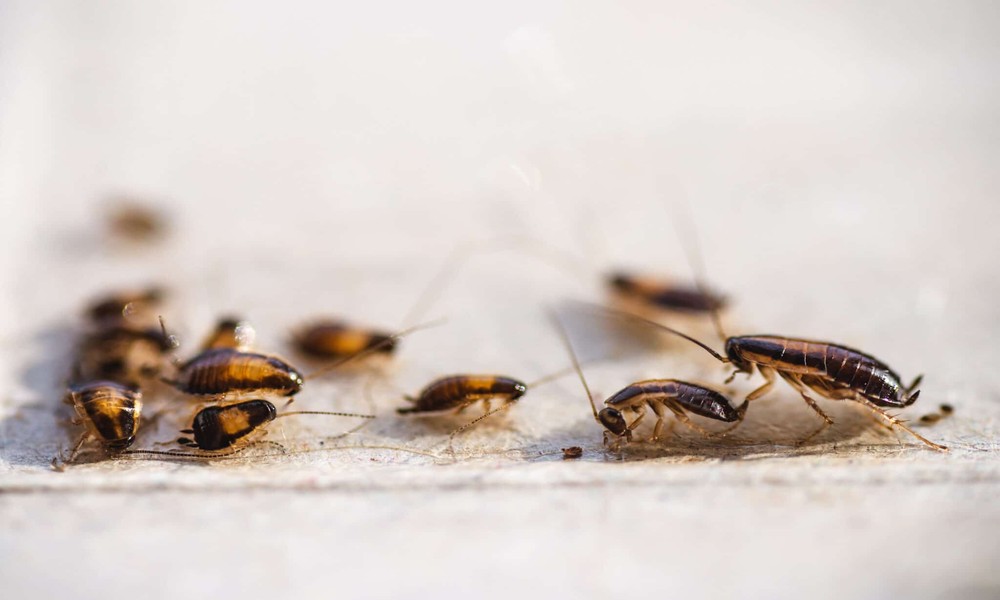
A homeowner sees a single roach scurry across the kitchen floor at night, buys a can of aerosol insecticide the next morning, sprays the baseboards and under the sink, and feels like the problem is being handled. Six weeks later the population has visibly grown, roaches are turning up in new rooms, and the sprays that seemed to work at first now kill almost nothing. This is the German cockroach pattern, and it plays out in Kansas City kitchens every month. Kansas City pest control companies with decades of cockroach work behind them, including ZipZap Termite & Pest Control in Lawson, see the same scenario constantly, and the failure is almost never about the homeowner doing anything obviously wrong. It is about pyrethroid resistance, cockroach biology, and a specific behavioral response to spray that spreads the infestation rather than containing it.
Why German Cockroaches Are a Different Problem Than Other Species
Four cockroach species routinely enter Kansas City structures, and only one is a true indoor pest. American cockroaches, oriental cockroaches, and brown-banded cockroaches are occasional invaders that typically come in from outside and do not sustain indoor breeding populations in most residential settings.
The German cockroach (Blattella germanica) is different. It is obligately indoor, completes its entire life cycle inside a warm, humid structure, and does not survive outdoors in Missouri winters. A German cockroach population in a kitchen means a colony is established, not visiting.
The reproductive math matters. A single adult female produces an egg case (ootheca) carrying 30 to 40 eggs, and she can produce four to eight oothecae in her lifetime. From first sighting to a population of several hundred takes roughly three months under typical kitchen conditions. Egg cases are carried by the female until hatching, which means treatments targeting adults alone leave the next generation protected.
Why Pyrethroid Sprays Have Stopped Working
Pyrethroids (bifenthrin, permethrin, cypermethrin, deltamethrin, and related compounds) are the active ingredients in nearly every consumer aerosol and ready-to-use cockroach spray sold at hardware stores. German cockroaches have developed documented, widespread resistance to this entire chemical class.
Research by Dr. Michael Scharf at Purdue University and Dr. Changlu Wang at Rutgers, among others, has tested field-collected German cockroach populations against standard pyrethroid products and found mortality rates that often fall below 20 percent at label doses. A 2019 study published in Scientific Reports tested populations from apartment complexes in several U.S. cities and found strains with high levels of resistance to multiple chemical classes simultaneously, a phenomenon called cross-resistance that can make even rotation strategies ineffective without entomological guidance.
The practical result is that consumer pyrethroid sprays kill a visible fraction of the adult population at initial contact and leave the majority of the colony untouched, particularly the protected egg cases and the nymphs deep in harborage.
Why Spraying Makes the Problem Worse, Not Just Ineffective
Pyrethroids are repellent by design. German cockroaches can detect the residue of these compounds and actively avoid treated surfaces. That aversion is well documented in the entomological literature and has direct consequences for how an infestation spreads.
When a homeowner sprays under the sink and along baseboards, the surviving population does not leave the home. It disperses. Roaches move to untreated areas: behind the refrigerator, into wall voids through electrical outlet gaps, up into cabinet tops, into neighboring rooms. A kitchen that had a contained population in two or three harborage spots becomes a house with a population in ten or fifteen.
Any homeowner who notices roaches appearing in rooms where they were not previously seen, following a round of spraying, is watching this dispersion in real time.
What Actually Eliminates German Cockroaches
Professional Kansas City pest control for German cockroaches looks very different from what consumers buy off the shelf.
Gel bait is the foundation. Insect growth regulator (IGR) products combined with non-repellent gel baits containing indoxacarb, fipronil, or abamectin are placed as small pea-sized droplets in harborage zones: hinge corners of cabinets, around appliance motor compartments, inside drawer tracks, under stovetops. Roaches consume the bait, return to the harborage, and contaminate nestmates through grooming and coprophagy, producing secondary kill that reaches the protected egg cases and nymphs sprays cannot touch.
Bait rotation matters. Populations can develop bait aversion to specific formulations (the glucose-aversion strains documented in the 2013 North Carolina State study being the best-known example), so a program that rotates active ingredients every two to three treatment cycles maintains effectiveness.
Non-repellent liquid residual products applied to cracks and crevices, such as fipronil or chlorfenapyr formulations, work differently from pyrethroids. Roaches cannot detect them, walk through the treated zone normally, and carry the active ingredient back to the harborage.
Sanitation handles the resource base. German cockroaches need water more urgently than food, so eliminating leaking pipes, standing water in sink drains, and condensation behind appliances is often the single highest-leverage change a homeowner can make. Reducing food access (cleaning grease from behind the stove, sealing pet food, managing crumbs under the refrigerator) compounds the effect.
Monitoring with sticky traps in kitchen corners tracks population trends over the treatment period, which is how a professional program knows whether the population is actually declining or moving rather than shrinking.
What to Stop Doing Before Treatment
Any ongoing spray use with consumer products should stop at least two weeks before professional treatment begins. Residual pyrethroid on surfaces repels cockroaches from the exact zones where gel bait needs to be placed, and it reduces the consumption rate that drives the secondary kill across the colony. A pest control technician arriving at a home where the homeowner sprayed that morning is starting from a significant disadvantage.
The Short Version
German cockroaches are an indoor-breeding, pyrethroid-resistant, repellent-avoiding species that consumer sprays both fail to control and actively make worse by scattering the population. Effective elimination depends on non-repellent gel baits, rotated actives, sanitation changes that eliminate water access, and monitoring that tracks actual population decline rather than visible sightings. For Kansas City homeowners whose kitchens have been through three rounds of store-bought sprays without resolution, a Kansas City pest control provider such as ZipZap Termite & Pest Control brings an approach built around current entomology rather than the chemistry that is driving the resistance problem in the first place.
