

If you’re reading this with water running across your floor right now, skip to the next section. The rest will still be here when the immediate problem is contained.
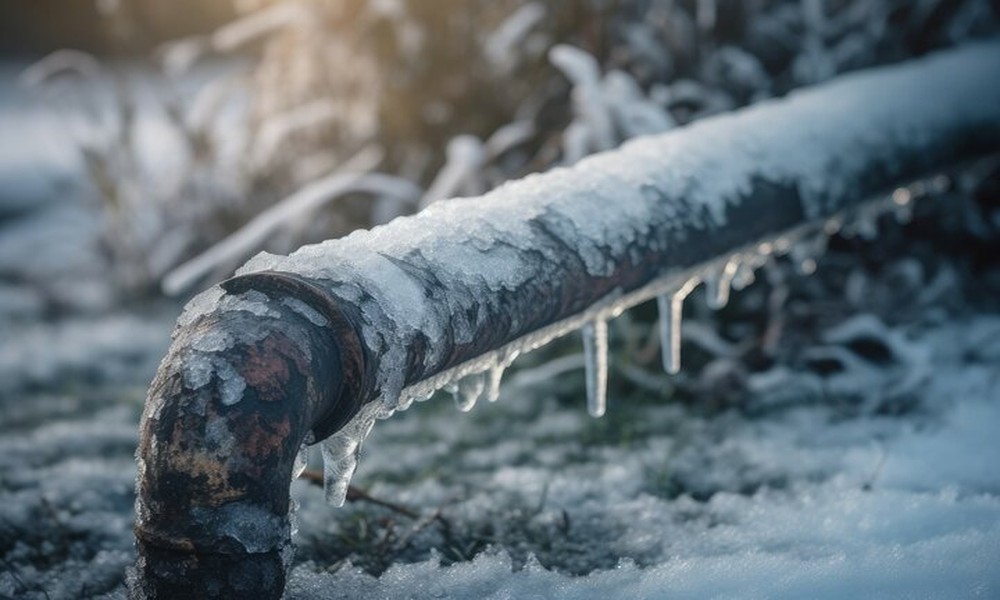
Pipe failures are the most common reason homeowners in Burley, Twin Falls, Rupert, and the rest of the Magic Valley end up calling Element Restoration during a cold snap. The temperature drops below zero, a section of pipe in an exterior wall or unheated crawl space freezes overnight, and once it thaws (often hours later, when the sun comes up), the pressure behind the ice blows the pipe open. By the time someone notices, gallons of water have already moved through walls, floors, and ceilings. What you do in the next hour matters more than almost anything else.
The First Ten Minutes: Stop the Water and Kill the Power
The single most important step is shutting off the water at the main valve, not the fixture closest to the leak. Fixture shutoffs only work if the line downstream is intact, which by definition it isn’t.
In most Idaho homes, the main shutoff is in the basement near the front of the house, in the utility room or garage where the water line enters from the street, or under the kitchen sink in older single-story homes. Look for a valve on a copper or PEX line just inside the foundation. If you can’t find it, the curb stop at the property line works, but you’ll need a long wrench or the meter key your city utility uses.
Once the water is off, kill the power to any area where it has reached outlets, light fixtures, or the breaker panel itself. Do this from the breaker, not by unplugging things in standing water. If the breaker panel is in the affected area, or your hands and shoes are wet, don’t touch it. Get everyone out of those rooms and call your utility to disconnect at the meter.
Document, Then Call
Before you start moving things or mopping, take photos and video of everything. Wide shots of each room. Close-ups of the source. Visible water on flooring, baseboards, walls, ceilings, and personal property. Date stamps matter for the insurance claim.
Then call two numbers, in this order. Your insurance company, to open a claim. A restoration company, to get drying equipment on site as fast as possible. These are different jobs: insurance handles the financial side, restoration handles the physical recovery. A plumber is a third call to repair the pipe itself, but they don’t dry out walls or remediate mold.
What Not to Do
There’s a strong instinct after a pipe break to start tearing things up. Resist it.
- Don’t pull up wet carpet, vinyl, or hardwood. Some of it can be saved with proper drying. What can’t needs to be documented in place before removal for the claim.
- Don’t run a household fan or shop heater into wet rooms expecting to dry things out. Standard fans push moisture deeper into wall cavities without removing it.
- Don’t throw away damaged items before they’ve been documented and listed.
- Don’t assume the water you can see is all of it. Water tracks along framing and pools in places you won’t notice for days, including inside wall cavities, behind cabinets, and under hardwood.
- Don’t use bleach on wet drywall or wood. It doesn’t penetrate, and the affected materials usually need to come out anyway.
Why the 24 to 48 Hour Window Matters
Mold begins growing on wet organic materials (drywall paper, wood, insulation, fabric) within 24 to 48 hours under typical indoor conditions. Once it establishes, the cleanup shifts from a water damage job to a mold remediation job, which is more invasive, more expensive, and slower.
The Institute of Inspection, Cleaning and Restoration Certification (IICRC) standard for water damage response is built around that window. Drying that starts within the first day prevents most of the secondary damage. Drying that starts on day three or four usually doesn’t. That’s the practical reason restoration companies push to get equipment placed quickly, even before the full scope of damage is clear. Time pulled out of that window cannot be recovered later.
What Happens When Element Restoration Arrives
A first response visit is focused on stopping ongoing damage, not finishing the job in a single trip. A technician will identify the source if it’s still active, extract standing water, take moisture readings of walls, floors, and contents to map the extent of saturation, and place dehumidifiers and air movers to begin drying. Affected materials that need to come out for the structure to dry are removed and documented. Salvageable contents are inventoried and, depending on the policy, moved off site for cleaning.
From there, the timeline depends on the size of the loss. A small bathroom leak might dry in three or four days. A whole-floor flood from a burst supply line can take a week or more, plus the rebuild work afterward. Element handles both the restoration phase and the reconstruction (drywall, flooring, paint, cabinetry) under one roof, which usually shortens the total project compared to coordinating separate companies.
If It Hasn’t Happened Yet
The prevention basics are worth twenty minutes of your time before the next cold snap. Insulate any pipe in an exterior wall, crawl space, or unheated garage. Keep cabinet doors open under sinks on exterior walls during deep cold. Let a faucet drip on the most vulnerable line if the forecast calls for below-zero temperatures. Know where your main shutoff is, and confirm it actually turns.
If something has already gone wrong, Element Restoration can be reached at (208) 670-2396 around the clock, and the team serves homeowners across a 100-mile radius from Burley. The faster the call comes in, the less of the house has to come out.
