

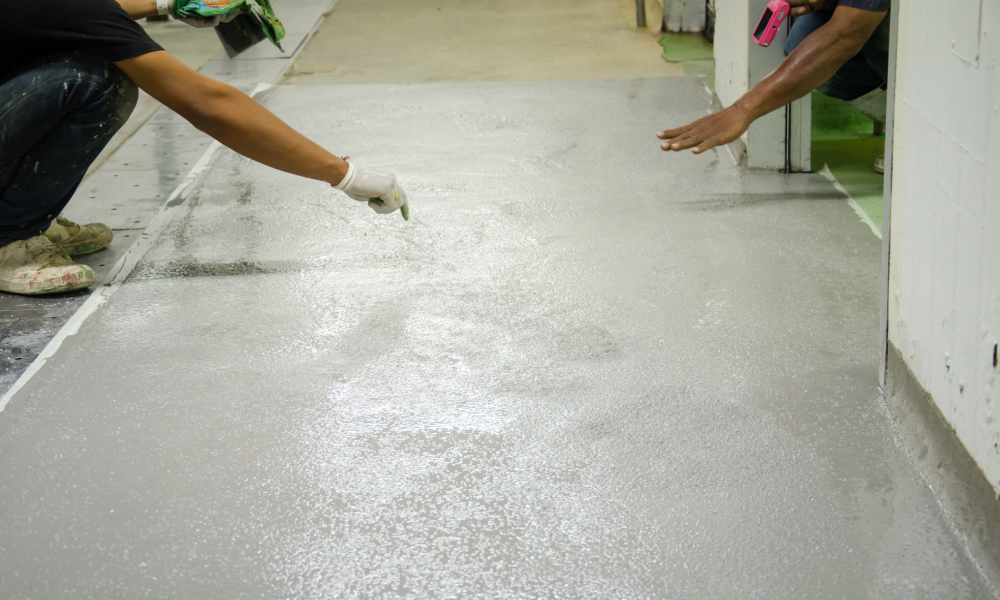
Flooring plays a bigger role in commercial spaces than many people realize. It affects safety, maintenance costs, brand perception, and long-term durability. That’s why more businesses are turning to commercial epoxy floor coating systems as a reliable, modern solution.
Epoxy flooring is no longer limited to factories and warehouses. Today, it’s widely used in retail stores, restaurants, healthcare facilities, offices, and showrooms. Its combination of strength, design flexibility, and low maintenance makes it a practical choice for spaces that demand both performance and appearance.
What Is Commercial Epoxy Flooring?
The Science Behind Epoxy Coatings
Commercial epoxy flooring is created through a chemical reaction between epoxy resin and a hardener. When mixed, these components cure into a rigid, seamless surface that bonds tightly to concrete. The result is a dense, durable coating that resists wear, chemicals, moisture, and impact.
Once cured, an epoxy floor forms a solid protective layer that can handle heavy foot traffic, rolling equipment, and daily use without cracking or peeling. This strength is what makes epoxy such a popular option in demanding commercial environments.
Different formulations allow epoxy systems to be tailored for specific needs, including self-leveling finishes, textured anti-slip surfaces, and high-build industrial coatings.
From Industrial Flooring to Modern Design Staple
Epoxy flooring originated in industrial settings where durability mattered more than appearance. Over time, advances in materials and application techniques expanded its role.
Today, epoxy floors are just as likely to appear in high-end retail spaces and offices as they are in warehouses. Designers now use epoxy coatings to create polished, modern interiors with custom colors, patterns, and finishes.
This shift reflects a broader trend toward materials that combine long-term performance with clean, contemporary design.
Why Businesses Choose Commercial Epoxy Floor Coating
Durability That Holds Up Over Time
One of the biggest advantages of a commercial epoxy floor coating is durability. Epoxy resists abrasions, stains, chemicals, and impact far better than many traditional flooring options.
This makes it ideal for environments where floors take constant abuse, such as manufacturing facilities, auto shops, commercial kitchens, and distribution centers. With proper installation and care, epoxy floors can last for decades.
Low Maintenance and Easy Cleaning
Epoxy creates a seamless, non-porous surface that does not trap dirt, dust, or moisture. Cleaning typically requires nothing more than sweeping and occasional mopping.
For businesses, this means lower cleaning costs, fewer repairs, and less downtime. In industries where hygiene is critical, such as healthcare and food service, this is a major advantage.
Moisture and Chemical Resistance
Spills are unavoidable in many commercial settings. Epoxy coatings resist water, oils, solvents, and chemicals that would damage other flooring materials.
This resistance protects the underlying concrete and reduces the risk of long-term structural issues caused by moisture intrusion.
Choosing the Right Type of Epoxy Coating
Common Commercial Epoxy Systems
Not all epoxy floors are the same. The right system depends on how the space is used.
- Self-leveling epoxy creates a smooth, glossy surface often used in retail spaces and offices.
- Epoxy mortar systems are thicker and reinforced with aggregates, making them ideal for heavy industrial use.
- Anti-slip epoxy coatings add texture for safety in kitchens, restrooms, and loading areas.
- Decorative flake systems combine durability with visual appeal and are popular in showrooms and commercial interiors.
Understanding traffic levels, exposure conditions, and safety requirements helps determine the best solution.
Customization and Design Flexibility
One of the most appealing aspects of commercial epoxy floor coating is customization. Epoxy can be tinted in virtually any color and finished in matte, satin, or high-gloss textures.
Metallic pigments, color flakes, and custom patterns allow businesses to align flooring with branding or design goals. Logos, zone markings, and directional elements can also be integrated directly into the floor.
This design flexibility turns epoxy flooring into a functional design element rather than just a surface.
Eco-Friendly Epoxy Options
Sustainability is increasingly important for commercial projects. Many manufacturers now offer low-VOC epoxy formulations that reduce emissions during installation.
Because epoxy floors last longer and require fewer replacements, they also reduce material waste over time. Some systems incorporate recycled materials, further supporting environmentally responsible building practices.
Choosing an eco-friendly epoxy system allows businesses to balance performance with sustainability goals.
The Installation Process Explained
Proper Surface Preparation Matters
The success of an epoxy floor depends heavily on preparation. Concrete surfaces must be cleaned, repaired, and mechanically profiled to ensure proper adhesion.
Cracks, moisture issues, and surface contaminants must be addressed before installation begins. Skipping this step often leads to premature failure.
Temperature and humidity are also carefully monitored during installation, as they affect curing and performance.
Professional Installation vs. DIY
While DIY epoxy kits exist, commercial epoxy floor coating systems are best installed by professionals. Commercial environments require precise mixing, application, and curing techniques that demand experience and specialized equipment.
Professional installers reduce the risk of bubbling, uneven finishes, and adhesion problems. For businesses, this means fewer disruptions and better long-term performance.
Maintaining a Commercial Epoxy Floor
Epoxy floors are known for easy upkeep. Regular sweeping and mopping with mild cleaners are usually sufficient.
Avoid abrasive tools or harsh chemicals that could dull the surface over time. Entry mats help reduce debris, especially in high-traffic areas.
Periodic inspections allow small issues to be addressed before they become costly repairs.
Long-Term Value and Cost Efficiency
Although the upfront cost of a commercial epoxy floor coating may be higher than basic flooring options, the long-term savings are significant.
Reduced maintenance, fewer repairs, and long service life lower total ownership costs. For businesses, this translates into less downtime and more predictable expenses.
Epoxy flooring often delivers one of the strongest returns on investment in commercial environments.
Trends Shaping the Future of Epoxy Flooring
Innovation continues to expand what epoxy floors can do. New formulations improve flexibility, sustainability, and appearance.
Design trends include high-end metallic finishes, textured surfaces, and integrated safety markings. Some systems even incorporate heating or lighting elements for specialized applications.
As businesses prioritize durability, cleanliness, and modern design, epoxy flooring continues to evolve to meet those expectations.
Final Thoughts on Commercial Epoxy Floor Coating
A commercial epoxy floor coating offers a rare combination of strength, flexibility, and visual appeal. It supports demanding environments while enhancing the overall look and function of a space.
For businesses seeking a long-lasting flooring solution that adapts to both operational and design needs, epoxy flooring remains one of the most reliable options available.
