

HOW WOOD PANELLING CAN TRANSFORM THE LOOK AND FEEL OF AN INTERIOR1.INTRODUCTION
People frequently underestimate the impact that a room’s walls have on its personality. While paint and wallpaper can alter a room’s hue, wood panelling can simultaneously provide depth, warmth, and texture. Wood panels have the power to drastically change an interior’s ambiance, whether they are used on a single feature wall or throughout an entire room. They can be used in both modern and traditional homes because they come in a variety of finishes, patterns, and hues.
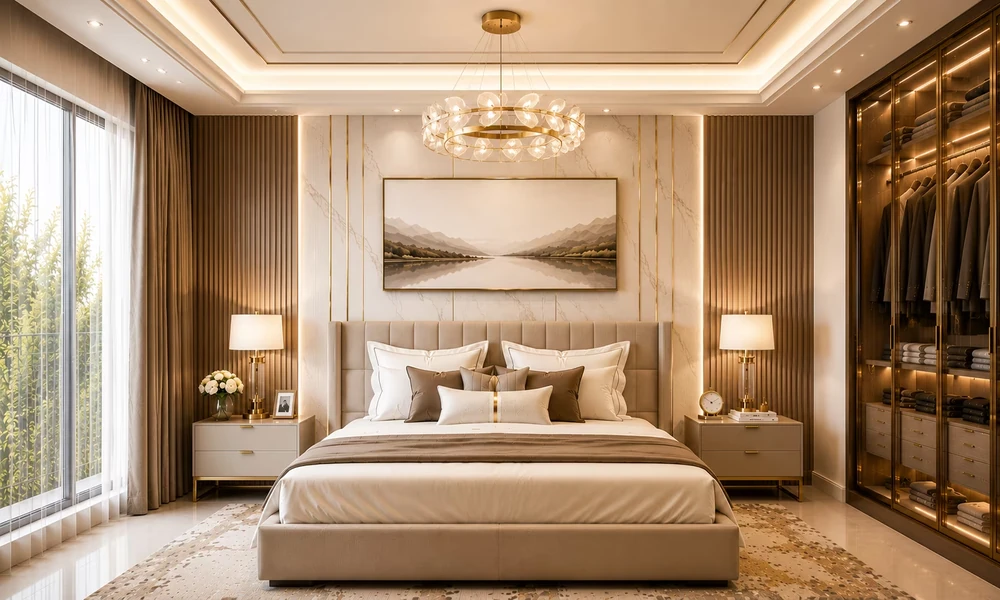
Choosing the right wood paneling can make a noticeable difference to the overall character of an interior. Beyond adding a natural element, it can introduce texture, depth, and visual warmth while complementing existing furniture and décor. Different wood tones, patterns, and finishes allow homeowners to create anything from a subtle backdrop to a striking feature wall, making panelling a flexible option for refreshing a room without changing every design element.
2. ADDING WARMTH AND CHARACTER
The inherent warmth that wood panelling adds to a space is one of its greatest benefits. Wood’s aesthetic softness can add cosiness to cold or uninteresting spaces. The walls have a sense of character that is hard to accomplish with a smooth painted surface because of the grain, knots, and minor colour variations. A room might feel more thoughtfully finished with even a basic panel design.
3. CREATING VISUAL INTEREST
Wood panelling can also transform a room’s appearance by adding texture and dimension. While horizontal layouts might make a small space appear larger, vertical panels can make a ceiling appear taller. While geometric patterns can give a more modern look, slatted panels produce rhythm and shadow. Because of this, panelling can be used to affect a space’s visual proportions in addition to being decorative.
4. DEFINING DIFFERENT AREAS
Open-plan interiors might occasionally lack obvious divisions between functions. Without totally enclosing a space, wood panelling provides a useful method of visual distinction. A panelled wall, for instance, can offer a distinctive backdrop behind a home office desk or separate a dining area from a living room.
5. SUPPORTING DIFFERENT INTERIOR STYLES
Wood panelling can be used in a variety of decorative styles. While deeper finishes might produce a richer and more elegant ambiance, light-coloured wood can go well with minimalist or Scandinavian interior design. Painted panels offer homeowners a great deal of choice and may be used in both traditional and modern spaces.
6. IMPROVING THE OVERALL ATMOSPHERE
Wood panelling has an impact on a room’s comfort level in addition to its beauty. Particularly in living rooms, bedrooms, and reading nooks, its organic appearance can foster a more tranquil and grounded ambiance. It can provide the impression that an environment is layered rather than visually flat when paired with appropriate lighting, furniture, and textiles.
7. CONCLUSION
Wood panelling may enhance an ordinary home by adding warmth, texture, depth, and personality. It is more adaptable than a purely ornamental wall treatment because it can define spaces and affect proportions. Well-chosen wood panelling can offer a room a unique personality while fostering a more welcoming atmosphere, whether it is employed as a subtle accent or a prominent design element. The secret is to choose a finish and design that accentuate the space’s function and personality.
