

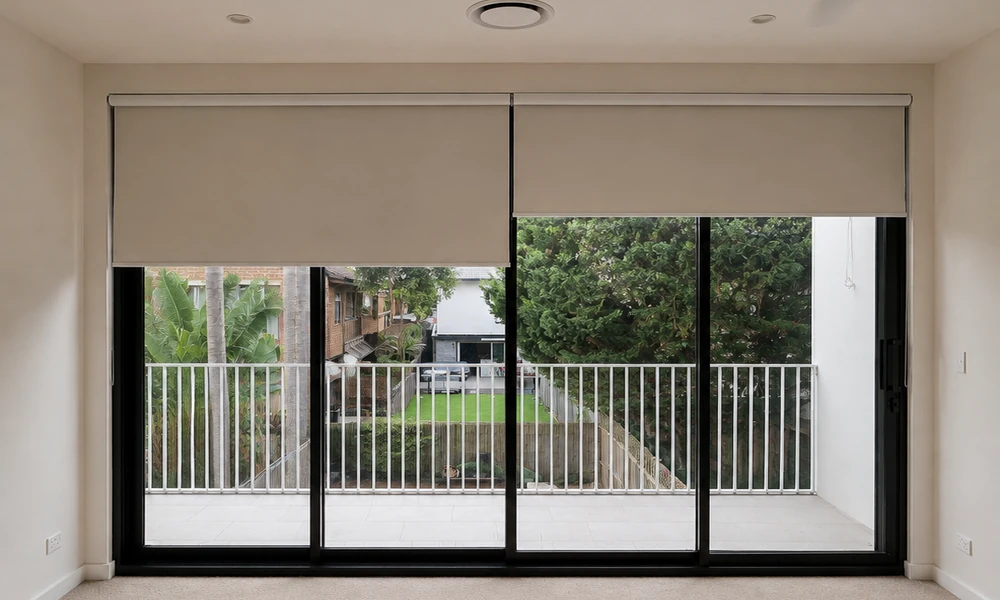
Swapping tired vertical blinds for something better is one of the easiest upgrades in an apartment. It’s also one of the few renovations where people get caught out by strata rules, building quirks or safety laws they didn’t know about.
If you own or rent in a strata building in New South Wales, here’s what to check before you order.
| The short answer Internal blinds rarely need strata approval, but check your by-laws for colour or backing rules. Get written approval for anything outside the glass. Keep window safety locks working, make sure cords are secured, and choose sunscreen fabric based on which way your windows face. |
|---|
1. Read your by-laws first
Every strata scheme has its own by-laws, and many have rules about anything that changes how the building looks from outside. That can include the colour of blinds facing the street, or a requirement that window coverings show a white or neutral backing. The NSW Government’s guide to strata by-laws explains how they work and what happens if one is breached.
Internal blinds are usually treated as a minor change, but it’s worth checking with your strata manager before you choose a bold colour. A neutral or white backing on the street side is the safe choice in most buildings.
Outdoor blinds are a different story. Zip screens, awnings and external venetians on a balcony almost always change the look of the building, and they’re often attached to common property. Get written approval from the owners corporation before you order these. It’s much cheaper than having them taken down later.
2. Don’t block or remove window safety devices
Since March 2018, residential strata buildings in NSW have had to fit window safety devices to windows that pose a fall risk to children. These devices limit the opening to less than 12.5 centimetres. They apply to openable windows where the floor is 2 metres or more above the ground outside and the bottom of the opening is less than 1.7 metres above the floor inside.
When new blinds go in, the locks and restrictors need to keep working. A good installer will check that brackets and headrails don’t stop the window locking properly, and won’t remove a device to make a blind fit.
3. Cords must be secured
Australia has mandatory safety standards for corded internal blinds and curtains. Supply rules have applied since 2010 and installation rules since 2015. Professional installers have to fit corded blinds so a loose cord can’t form a dangerous loop, usually with a cord guide or cleat fixed to the wall.
If you have young children, or rent to families, cordless or motorised blinds avoid the issue altogether.
4. Check what you’re drilling into
Most apartment buildings have concrete ceilings and walls, and some have steel window frames. Blinds can be fixed into all of these, but it needs the right fixings. It also means drilling noise, so check your building’s rules on tradespeople’s hours and give your neighbours a heads-up.
If the ceiling has a bulkhead or hidden pelmet, measure the depth before choosing a blind. Some double roller setups need more room than you’d expect.
5. Plan for the sun on your side of the building
Apartments on high floors get light that houses don’t. West-facing units in particular cop strong afternoon sun, glare off nearby glass and heat that builds up inside. Sunscreen roller blinds are the usual answer, because they cut glare while keeping your view.
| Fabric openness | View out | Glare and heat | Good for |
|---|---|---|---|
| 1% | Soft | Blocks the most | West-facing rooms, home offices |
| 3% | Clear | Strong control | North or west living areas |
| 5% | Clearest | Good control | Most living rooms |
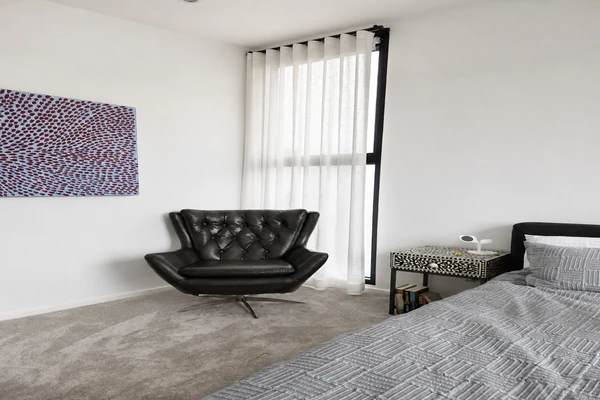
Darker sunscreen colours usually give a clearer view out than light ones. For bedrooms, a blockout roller on its own, or a double bracket with sunscreen and blockout together, gives you both daytime view and night-time sleep.
6. Renters, ask before you change anything
If you rent, the blinds belong to the landlord. Get written permission before replacing them, and agree on what happens to the new ones when you move out.
A local example
North Sydney is a good snapshot of all this. The area mixes high-rise apartments with city and harbour views, offices, and heritage terraces around Lavender Bay and McMahons Point. Installers there deal with concrete ceilings, west-facing glass, windy balconies and strata approvals every week. Local blind maker romablinds.com.au sums up the outdoor side simply, advising apartment owners to check with their strata manager before ordering outdoor blinds.
The short checklist
- Read the by-laws and check colour or backing rules.
- Get written approval for anything on the balcony or outside the glass.
- Make sure window safety devices still work after the install.
- Choose cordless or motorised if there are young children around.
- Pick sunscreen openness based on which way your windows face.
Common questions
Do I need strata approval to change my blinds?
Usually not for internal blinds, though some by-laws set colour or backing rules. Outdoor blinds and awnings almost always need approval.
Who pays for window safety devices in NSW strata?
The owners corporation is responsible for installing them on high-risk windows, though some schemes pass a by-law making individual owners responsible.
What blinds are best for a west-facing apartment?
Sunscreen roller blinds in 1% or 3% openness for living areas, and blockout or a double roller for bedrooms.
Do those five things on the checklist and new blinds are one of the simplest upgrades you can make to an apartment.
