

Heating, ventilation, and air conditioning systems are the operational backbone of any modern business premises, ensuring comfortable working conditions for employees and visitors alike. However, these complex installations often account for the largest share of a commercial property’s total electricity usage. Rising energy tariffs and expanding operational demands mean that inefficient climate control can quickly erode corporate budgets and weaken overall profitability.
Investing in professional commercial HVAC services for buildings provides facility managers and property owners with a structured, data-driven approach to curbing energy waste. Beyond immediate cost reductions, systematic maintenance, precision balancing, and targeted equipment upgrades protect valuable assets, enhance indoor air quality, and help organisations meet increasingly strict corporate sustainability targets.
Understanding the Causes of Commercial Energy Waste
Before implementing energy-saving solutions, it is essential to understand why commercial heating and cooling systems consume excess electricity. In many commercial facilities, performance degradation occurs gradually over time, remaining unnoticed until monthly utility bills spike unexpectedly.
Outdated Machinery and Poor Initial Sizing
Older HVAC equipment often lacks the modern variable-speed technology required to dynamically match energy output with actual heating or cooling demand. Furthermore, systems that were incorrectly sized during initial installation-whether oversized or undersized-frequently cycle on and off too rapidly. This constant cycling draws high startup currents, creates uneven temperature distribution, and wears out internal components prematurely.
Lack of Regular Preventive Maintenance
Over months of continuous operation, dust, grease, and atmospheric pollutants accumulate on crucial internal components, restricting system performance:
- Dirty Condenser and Evaporator Coils: Blocked coils hinder efficient heat transfer, forcing compressors to run for extended periods and draw significantly more power to achieve set points.
- Clogged Air Filters: Restricted airflow creates static pressure imbalances, putting extra strain on supply fans and blower motors while degrading indoor air quality.
- Refrigerant Level Imbalances: Low refrigerant levels, caused by minor leaks, drastically reduce cooling capacity, causing the entire system to run continuously without reaching desired temperatures.
- Worn Belts and Unlubricated Bearings: Increased mechanical friction forces motors to work harder, consuming excess energy simply to overcome internal resistance.
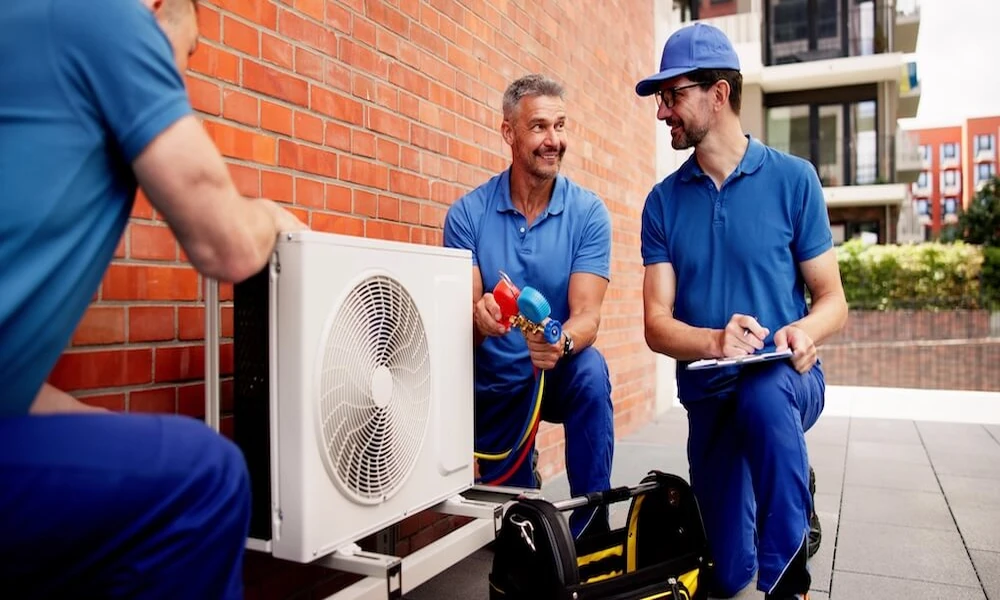
Partnering with qualified engineers for structured commercial HVAC services for buildings ensures these minor mechanical issues are identified and resolved long before they turn into expensive energy drains or complete operational failures.
Core Strategies to Lower Building Energy Consumption
Modern commercial facilities rely on a combination of routine maintenance, intelligent controls, and strategic mechanical upgrades to keep operational costs low and system performance high.
1. Tailored Preventative Maintenance Plans
Scheduled inspections keep equipment operating at peak thermal efficiency throughout every season. Comprehensive servicing typically includes cleaning heat exchanger coils, checking electrical connections, lubricating moving parts, calibrating thermostats, inspecting safety controls, and replacing air filters. A well-maintained commercial system can operate up to 15 to 20 percent more efficiently than a neglected one, delivering immediate returns on service investments.
2. Upgrading to Building Automation and Smart Thermostats
Centralised Building Management Systems (BMS) allow facility teams to monitor energy usage across multiple zones in real time. Smart controls can automatically lower heating or cooling in unoccupied areas, adjust setpoints based on external weather forecasts, and implement strict night setback schedules. Eliminating unnecessary heating and cooling outside of core business hours yields substantial, long-term utility savings.
3. Retrofitting and Variable Frequency Drives (VFDs)
If a full system replacement is not currently within the capital expenditure budget, retrofitting key components can offer exceptional returns. Installing Variable Frequency Drives on supply fans, return fans, and water pumps allows motors to adjust their rotational speed based on real-time load demand, rather than operating at full power constantly. This simple modification reduces energy consumption during partial-load periods, which make up the vast majority of a building’s operating hours.
4. System Balancing and Ductwork Repairs
Leaky, uninsulated, or poorly balanced ductwork wastes conditioned air in unconditioned ceiling voids and plant rooms. Professional air balancing ensures that air is distributed evenly across all offices and common areas, eliminating hot or cold spots and reducing the overall load on the primary equipment. Sealing duct joints prevents costly thermal loss before air even reaches the occupied spaces.
Long-Term Benefits Beyond Reduced Energy Bills
Lowering monthly electricity expenses is often the primary objective, but comprehensive, expert system management brings substantial secondary commercial benefits:
- Extended Asset Lifespan: Reducing mechanical stress prevents premature equipment failure and defers expensive capital replacements for years.
- Enhanced Occupant Comfort and Productivity: Consistent temperature control, precise humidity management, and adequate fresh air ventilation boost employee focus and reduce workplace absenteeism.
- Reduced Carbon Footprint: Decreasing overall energy consumption directly reduces operational carbon emissions, helping businesses comply with national environmental standards and ESG criteria.
- Minimized Unplanned Downtime: Proactive servicing identifies failing components early, preventing emergency system breakdowns during peak summer or winter weather.
Conclusion
Controlling commercial energy expenditure requires a proactive, structured approach to facility management. By addressing hidden inefficiencies through regular preventive maintenance, smart automation, ductwork optimization, and timely retrofits, commercial properties can dramatically trim utility bills while improving overall system reliability. Partnering with experienced service professionals ensures your heating, ventilation, and cooling setup remains efficient, sustainable, and cost-effective for years to come.
===============================================================
