

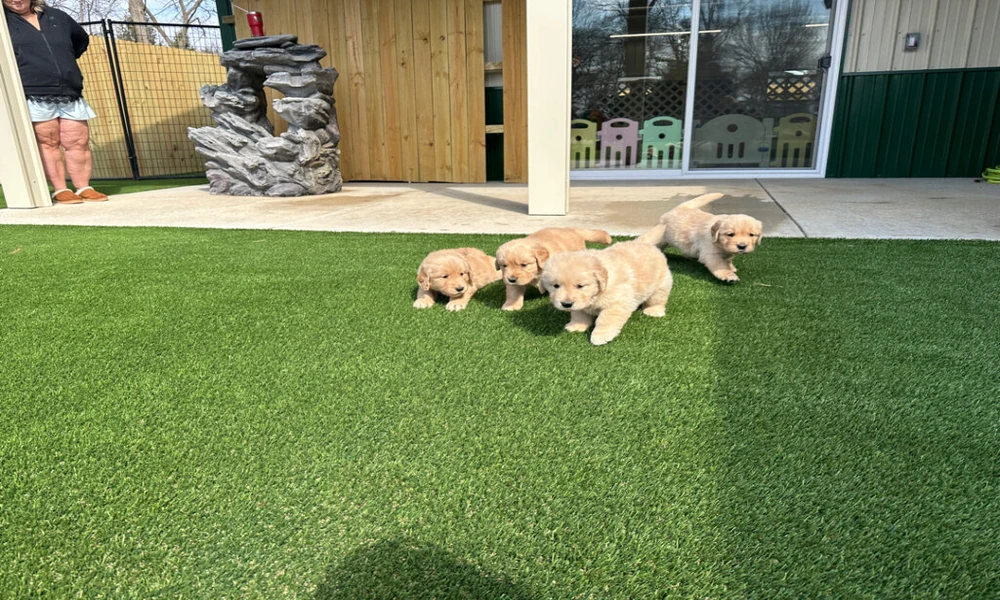
You step outside at breakfast and the yard smells fine. By mid-afternoon, the same patch of artificial grass smells like a kennel. Nothing new happened in those few hours. The smell was already there, waiting for heat.
That daily swing is one of the most useful clues a dog owner gets. It tells you the problem isn’t on the blades you can see. It’s in the layers below them, and it explains why a quick hose-down feels good on Tuesday and stops working by Friday.
The chemistry behind the afternoon stink
Fresh dog urine isn’t what you’re smelling. Fresh urine contains very little free ammonia, but it carries plenty of urea, which has no smell of its own. The trouble starts when common bacteria convert that urea into ammonia.
On artificial grass, that conversion happens wherever urine residue lingers: around the base of the fibers, in the infill, and on the backing. Each new visit from your dog adds more urea to the same spot. Dogs also tend to return to favorite places, so a small area can carry a heavy load.
Heat then does the delivery work. Warm residue releases its odor into the air much faster than cool residue, so the smell climbs with the temperature. And synthetic surfaces get hot. On one Utah athletic field, researchers recorded an average surface temperature of 117°F, compared with 78°F on natural turf. A backyard won’t match a stadium field exactly, but the direction is the same: full sun turns your lawn into a warm plate under whatever is sitting in the infill.
Why it can smell worse after it rains
Dog owners often expect a good storm to fix things. Sometimes the opposite happens. Rain can dilute and move residue, but it doesn’t reliably remove what has collected in the infill. Moisture can also reactivate old deposits, and humidity can increase urine odors. A warm, sunny afternoon after a rainy morning is the classic moment for a yard to announce itself.
If your turf smells sharpest in those conditions, treat that as useful information. It usually means residue is held below the surface rather than sitting on top of it.
What actually helps at home
You don’t need a complicated system. You need a few small habits, repeated often enough that residue never gets the chance to build.
- Pick up solids daily. The Synthetic Turf Council’s field guidance says to remove animal deposits as soon as possible, and that advice applies at home too.
- Rinse the favorite spots often. Several times a week is a sensible target in warm months. Rinsing won’t remove everything, but it dilutes fresh urine before bacteria go to work on it.
- Rinse in the morning. Water applied before the day heats up has time to drain through the system. It also spares you from standing on a hot surface.
- Use an enzyme cleaner made for artificial grass. These products are designed to break down organic residue, and they need contact time to work. Follow the label on dilution, dwell time, and rinsing. Results depend on how far the residue has traveled.
- Brush high-use areas once a month. Brushing loosens matted fibers and helps air and water move through the surface.
A simple turf cleaning routine covers most of this and takes less time than mowing ever did.
What to skip
A few popular fixes make things worse or just buy a day or two.
- Fragrance sprays. They cover the smell without touching its source, so it returns as soon as the perfume fades.
- Bleach and harsh household chemicals. These can damage fibers and backing, and they leave residue where your dog walks.
- Solvents. The same field guidance warns against cleaners containing alcohol or acetone.
- A pressure washer on full blast. High pressure can drive contaminated water deeper and disturb the infill. It can also fray fiber tips if the angle or pressure is wrong.
When it’s time to call in help
Home care keeps a clean yard clean. It rarely rescues a yard that already has months of buildup. Look for these signs that the problem has moved past what a hose can reach:
- The odor returns within a day or two of cleaning.
- The smell spikes after rain or in afternoon heat.
- One corner smells strongly no matter what you do.
- Water sits on the surface instead of draining.
At that stage, the job is usually about removing odor from the infill, not the surface. Professional extraction pulls dirty water back out rather than pushing it down, and an enzyme treatment can then work on what remains. For a closer look at the tradeoffs, this breakdown of DIY versus professional turf cleaning can help you decide.
In Central Texas, we suggest a professional clean about once a quarter for homes with dogs. Households with several large dogs, or small yards with one heavily used corner, may need more. Yards with light use can go longer.
One more thing to ask your installer
If you’re installing new turf or replacing old infill, ask how the system handles pet use. Infill choice matters. Some infill makers say raw sand can make urine odors worse, and many sell treated or mineral-based products designed for pet areas. Those claims come from companies selling the product, so ask for test data and a warranty in writing.
The afternoon stink isn’t a mystery, and it isn’t a sign that your turf was a mistake. It’s a chemistry problem with a practical answer: fewer deposits left behind, more thorough rinsing, and a deep clean before the residue gets ahead of you.
