

Gutters are not the most exciting home improvement project, but they are one of the more consequential ones. A properly installed gutter system protects your foundation, your siding, your landscaping, and your roof line from water damage that can be expensive to repair. A poorly installed one creates exactly the problems it was supposed to prevent. In Fort Worth, where the weather swings between extended dry spells and sudden heavy rainfall events that can drop significant water in a short period, having a gutter system that actually works the way it should matters more than most homeowners realize until something goes wrong.
Choosing the right gutter installer in Fort Worth is not complicated, but it does require a bit more than picking the lowest quote you get. Here is what to look for and what to watch out for.
Understand What You Are Actually Buying
Before you start collecting quotes, it helps to understand the basics of what a gutter installation involves so you can evaluate what different contractors are proposing and why the prices vary.
The most common gutter type installed on Fort Worth homes is seamless aluminum guttering, fabricated on-site using a roll-forming machine that the installer brings to the job. Seamless gutters have no joints along the straight runs, only at corners and downspout connections, which dramatically reduces the number of potential leak points compared to sectional gutters assembled from pre-cut pieces.
Gutter size is a practical decision based on your roof area and local rainfall intensity. Standard 5-inch gutters cover the majority of residential applications in Fort Worth. 6-inch gutters handle higher water volume and are worth considering for homes with large roof sections or steep pitches that funnel significant water into a single gutter run.
Downspouts carry water from the gutters to the ground and away from the foundation. Their size, number, and placement matter as much as the gutters themselves. An installer who proposes too few downspouts for your roof area is setting up a system that will overflow in heavy rain regardless of how well the gutters themselves are installed.
Hangers are the fasteners that attach gutters to the fascia board. Hidden hanger systems screwed directly into the fascia are the current standard and significantly more secure than the older spike and ferrule method. How gutters are fastened to the house is a detail worth asking about specifically.
Check Licensing, Insurance, and Local Credentials
Texas does not require a specific gutter installation license at the state level, but there are still credentials and protections worth verifying before you hire anyone.
General liability insurance is essential. Gutter installation involves ladders, roofline work, and the potential for property damage or personal injury. A contractor without adequate liability coverage leaves you exposed to costs that should be their responsibility. Ask for a certificate of insurance and verify that coverage is current before work begins.
Workers compensation coverage is important if the contractor has employees working on your property. Without it, an injured worker could potentially pursue a claim against your homeowner’s insurance. Ask about this specifically rather than assuming it is in place.
A physical local presence in the Fort Worth area is worth noting. A company that operates locally has a reputation to protect in the community, is easier to reach if problems arise after installation, and is more likely to stand behind their warranty than a fly-by-night operation that may not be reachable six months later.
Membership in local business organizations like the Fort Worth Chamber of Commerce or credentials from national industry associations indicate a level of professional seriousness, though they are not substitutes for the more fundamental insurance and experience checks.
Get Multiple Quotes and Understand What Each Includes
Getting at least three quotes for a gutter installation project in Fort Worth is standard practice and worth the effort. Prices vary enough between installers that a single quote gives you no useful reference point, and the variation often reflects real differences in materials, methods, and experience rather than random pricing.
When you receive quotes, make sure they are detailed enough to actually compare. A quote that says gutters installed for $1,200 tells you almost nothing useful. A quote that specifies linear footage of gutter, gutter size, material and gauge of aluminum, number and size of downspouts, hanger type, and what is included in any warranty gives you the information you need to evaluate it against other quotes on equal terms.
Pay attention to what is and is not included in each quote. Removal and disposal of existing gutters, correction of fascia board damage before installation, and gutter guard installation if you want it are all things that some installers include and others quote separately. Getting surprised by add-on costs after you have committed to a contractor is avoidable if you ask the right questions upfront.
Do not automatically choose the lowest quote. A significantly below-market price usually reflects something, whether that is thinner gauge aluminum that dents and corrodes faster, fewer downspouts than your roof requires, inadequate fastening, or a contractor who cuts corners on the details that determine how long the installation holds up in Fort Worth’s weather.
Ask About Materials and Gauge
Not all aluminum gutters are equal, and the gauge of the material used affects how well the gutters hold up over time. Standard residential aluminum gutters in Fort Worth are typically fabricated from 0.027-inch aluminum. Higher quality installations use 0.032-inch aluminum, which is meaningfully more rigid, more resistant to denting, and more durable in high wind and hail events that Fort Worth sees regularly.
The difference in material cost between standard and heavier gauge aluminum is modest in the context of a full gutter installation. The difference in longevity and performance is more significant. Ask specifically what gauge of aluminum a contractor uses and why. An installer who uses heavier gauge material and can explain why will typically deliver a better product than one who does not know or does not think it matters.
Gutter color is a more straightforward decision but worth thinking through before you get quotes. Most aluminum gutter systems are factory painted in a range of standard colors. Choosing a color that matches or complements your fascia and trim avoids the dated look of gutters that clash with the rest of the exterior.
Evaluate the Installation Details That Determine Performance
The quality of a gutter installation is largely determined by details that are not visible once the work is complete. Knowing what to ask about and what to look for during the installation keeps a contractor accountable to standards you might not otherwise be able to verify.
Slope is one of the most critical installation variables. Gutters need to slope slightly toward each downspout to allow water to drain rather than pool. The standard is roughly a quarter inch of drop for every ten feet of gutter run. Too little slope and water sits in the gutter, accelerating corrosion and creating weight that stresses the fasteners. Too much slope and the gutter looks visibly tilted and may not catch water effectively at the high end.
Downspout placement should be determined by the roof geometry, not by what is convenient for the installer. Water needs a path to the ground at regular intervals and at the natural collection points of your roof. Asking an installer to explain their downspout placement decisions is a reasonable question that should have a specific, logical answer.
Fascia condition needs to be assessed before installation. Gutters fastened to rotted or damaged fascia boards will not hold. A reputable installer inspects the fascia before they start and flags any damage that needs to be addressed. An installer who installs over damaged fascia without mentioning it is either not looking or not telling you, and either way the installation will not last.
End caps and corner joints are sealed with a combination of mechanical fasteners and gutter sealant. These are the highest-risk points for leaks and deserve careful attention during installation. Ask your installer what sealant they use and how they apply it.
Ask About Warranties and What They Cover
A gutter installation warranty has two components that are worth understanding separately. The materials warranty covers defects in the aluminum, paint, and other components and typically comes from the manufacturer. The workmanship warranty covers the quality of the installation itself and comes from the contractor.
Workmanship warranties on gutter installations in Fort Worth typically range from one year to a lifetime depending on the contractor. A longer workmanship warranty is generally a positive signal because a contractor who offers a lifetime warranty on their work has a strong incentive to do it correctly the first time.
Ask specifically what the warranty covers and what would void it. Some warranties do not cover damage from hail, falling branches, or ladder impacts. Some require annual maintenance to remain valid. Understanding the terms before you sign anything avoids surprises if you need to use the warranty later.
Also ask how the contractor handles warranty claims in practice. A warranty is only as good as the company backing it, and a contractor who is hard to reach or slow to respond to a warranty issue is not delivering the protection the warranty implies. Online reviews often contain useful information about how contractors handle post-installation issues.
Read Reviews With Specific Attention to Follow-Through
Online reviews for gutter installers in Fort Worth vary considerably in usefulness. A review that says great job, fast and clean tells you almost nothing. A review that describes a specific experience, whether about the quality of the installation, how the company handled a problem that came up, or whether the system performed well through a heavy rain event, gives you something to evaluate.
Pay particular attention to reviews that describe what happened when something went wrong. How a contractor responds to problems is often more informative than how they perform when everything goes smoothly. A company that shows up quickly and resolves issues without argument when a warranty situation arises is one you can trust to stand behind their work.
Look for reviews that mention Fort Worth specifically or reference local weather events. A gutter system’s performance through a Fort Worth hail storm or heavy rainfall event is the most relevant test of installation quality in this market, and a reviewer who mentions that is giving you directly applicable information.
Consider Gutter Guards at Installation Time
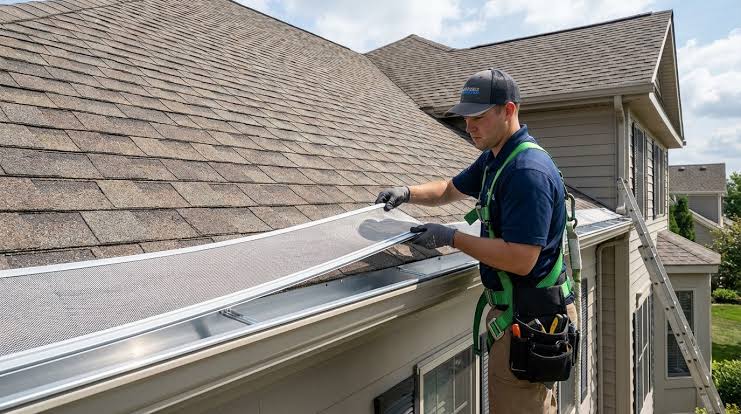
If you have trees near your home, particularly the live oaks and pecans common throughout Fort Worth neighborhoods, gutter guards are worth considering at the time of installation. Adding them later is possible but costs more and involves more disruption than including them in the original installation.
Gutter guards vary considerably in design and effectiveness. Micro-mesh systems that filter debris while allowing water through are generally considered the most effective option for Fort Worth’s mix of leaf types and rainfall intensity. Reverse-curve and surface tension systems work well in some conditions but can struggle with the fine debris from certain tree species common in North Texas.
Ask your installer specifically what gutter guard systems they offer and install, why they recommend what they recommend, and what maintenance is still required with the system in place. Any installer who claims a gutter guard system requires zero maintenance forever is overstating the case. All systems require some periodic attention, and knowing what that looks like helps you make a realistic decision.
The Bottom Line
Choosing a gutter installer in Fort Worth comes down to doing a bit more homework than just collecting prices and picking the middle one. Verify insurance, understand what materials and methods are being proposed, ask the questions that reveal whether an installer knows their work, and read reviews with attention to what they say about follow-through and warranty service.
The gutters on your home are a long-term investment in protecting the structure from water damage that is expensive to repair. Getting that installation right the first time, with a contractor who will stand behind it, is worth the extra time it takes to choose carefully.
