

Key Highlights
- Frequent gas top-ups are often a temporary fix for a much larger underlying problem like a refrigerant leak.
- Extremely dirty cooling coils can prevent heat exchange, making it feel like the gas is low even when it is not.
- A malfunctioning compressor may fail to circulate the refrigerant, leading to a total loss of cooling efficiency.
- Blocked air filters restrict airflow, causing the evaporator coils to freeze and stop the cooling process entirely.
- Professional leak detection is necessary to find microscopic holes in the copper piping or the cooling coil.
Introduction
It is a common frustration for many residents: the air conditioner begins to blow lukewarm air, a technician arrives to perform an aircon gas top-up, and for a week or two, the room feels cold again. However, the cooling power inevitably fades, leaving the homeowner back at square one. While many believe that refilling the gas is a standard part of maintenance, it is actually a sign that something is wrong. An air conditioner is a closed-loop system, meaning the refrigerant should not be consumed or disappear like petrol in a car. If your unit constantly requires a gas top-up for your aircon, you are likely treating the symptom rather than the disease. Understanding why cooling power fluctuates is the first step toward a permanent solution.
The Presence of Persistent Refrigerant Leaks
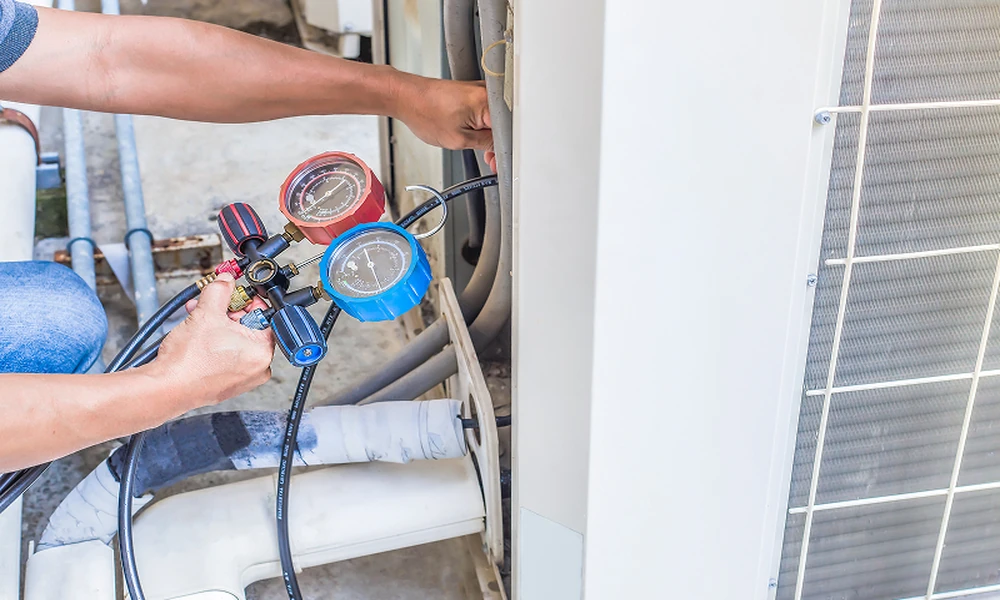
The primary reason a unit loses its cooling ability shortly after a refill is a leak. Refrigerants can escape through tiny pinholes in the evaporator coil, the condenser coil, or the copper tubing connecting the two. These leaks are often caused by formicary corrosion, which happens over time due to the interaction of moisture and chemicals in the air. Simply performing an aircon gas top-up without fixing the hole is like pouring water into a bucket with a hole in the bottom. Eventually, the pressure drops again, the compressor works harder, and the air stops being cold. A comprehensive pressure test is usually required to locate these leaks so they can be sealed or the affected parts replaced.
Blocked Heat Exchange Coils
Sometimes, the problem has nothing to do with the gas levels at all. Over months of operation, the internal cooling coils and the external condenser coils accumulate dust, hair, and grime. This layer of filth acts as an insulator, preventing the refrigerant from absorbing heat from your room or releasing it outside. When this happens, the system may have the correct amount of gas, but it cannot perform heat exchange effectively. A technician might suggest a gas top-up for your aircon because the pressure readings look irregular, but the real solution is a deep chemical cleaning of the coils to restore the metal’s thermal conductivity.
Compressor and Component Failures
The compressor is the heart of the air conditioning system, responsible for pumping the refrigerant through the coils. If the compressor is ageing or has a faulty capacitor, it may not be able to build up enough pressure to circulate the gas properly. In this scenario, even if the unit is full of refrigerant, the cooling effect will be minimal. Other components, such as the thermistor or the expansion valve, can also fail, leading to incorrect temperature readings or improper gas flow. These mechanical issues often mimic the symptoms of low gas, leading to unnecessary refills when the actual requirement is a component repair or replacement.
Restrictive Airflow and Frozen Coils
Airflow is the lifeblood of any cooling system. If the air filters are heavily clogged or the blower fan is covered in thick dust, the air cannot pass over the cold coils quickly enough. This causes the temperature of the coils to drop below freezing, leading to ice formation on the unit. Once the coils are encased in ice, they can no longer cool the air passing through them. A homeowner might assume they need an aircon gas top-up because the air feels warm, but the issue is actually restricted airflow. Regularly cleaning your filters and ensuring the blower fan is clear of obstructions can often resolve cooling issues without needing any refrigerant adjustments.
Conclusion
If you find yourself frequently paying for an aircon gas top-up, it is time to look deeper into the health of your cooling system. An air conditioner that is well-maintained and free of leaks should hold its refrigerant for many years. Persistent cooling loss usually indicates a leak, mechanical failure, or severe dirt accumulation. By addressing the root cause through professional diagnostics and thorough cleaning, you can enjoy consistent, reliable cooling without the recurring cost of gas refills. Investing in a proper repair today will save you from the cycle of temporary fixes and high electricity bills tomorrow.
Stop settling for temporary fixes and get to the bottom of your cooling issues today. Contact Heng Aircon to schedule a professional inspection or to book a reliable aircon gas top-up for your home.
